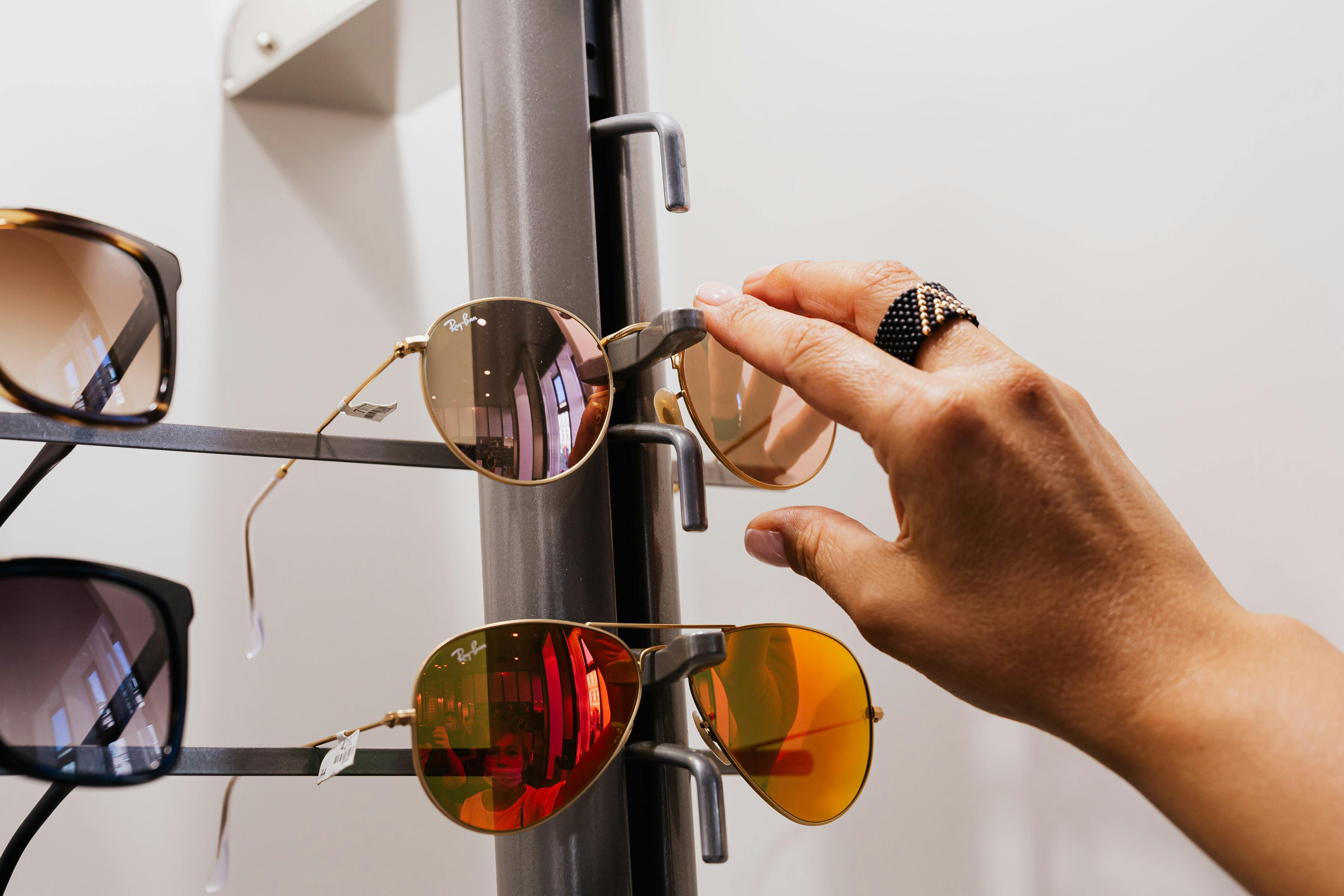
Open any junk drawer and you’ll find them. The gas station aviators with one bent arm. The festival pair missing a nose pad. Three or four pairs of sunglasses you’d never choose to wear but somehow can’t throw away.
This is the default relationship most people have with eyewear. Accumulation without intention. The result is a collection of frames that protect your eyes from the sun but do absolutely nothing for the way you look or feel.
There’s a better approach, and it starts with subtraction.
The math of fewer pairs
A single pair of well-chosen sunglasses that you wear every day for two years costs less per wear than five cheap pairs you cycle through and lose. If you spend $70 on frames you genuinely love versus $15 five times on frames you tolerate, the expensive pair is actually the budget option.
But the real argument isn’t financial. It’s about how you show up. When you have one pair that fits your face perfectly, that complements your wardrobe, that makes you feel slightly more put-together every time you leave the house, you stop thinking about sunglasses as a disposable accessory and start treating them as part of your identity.
That shift changes everything.
What “better” actually means
Better doesn’t mean expensive. It means considered. A $65 pair of frames from an independent brand that was designed with intention will outperform a $300 pair from a conglomerate that was designed to fill a product line gap.
Better means the frame shape works with your bone structure, not against it. It means the weight feels right on your nose and ears after two hours, not just two minutes in the store. It means the color of the acetate or metal complements your skin tone rather than competing with it.
Better is a pair you reach for automatically because putting them on feels like the final edit on your outfit. Not an afterthought. Not a compromise. The finishing touch.
The one-pair test
Try this: for the next two weeks, wear only one pair of sunglasses. Pick your best pair and commit. Notice how it simplifies your morning. Notice whether you start to build outfits around the frames rather than grabbing whatever’s closest to the door. Notice how you feel when someone compliments them, because people will.
If you don’t own a pair worth committing to for two weeks, that’s the clearest sign you need to upgrade, not add.
The investment reframe
The eyewear industry has spent decades conditioning us to treat sunglasses as impulse purchases. Racks by the cash register. Buy-one-get-one deals. A price point low enough that losing them doesn’t sting.
But the best-dressed people you know don’t think about eyewear that way. They chose their frames deliberately, and those frames became part of how the world recognizes them. Think about anyone whose style you admire. Their sunglasses aren’t random. They’re a signature.
One great pair. Worn with intention. That’s the move.