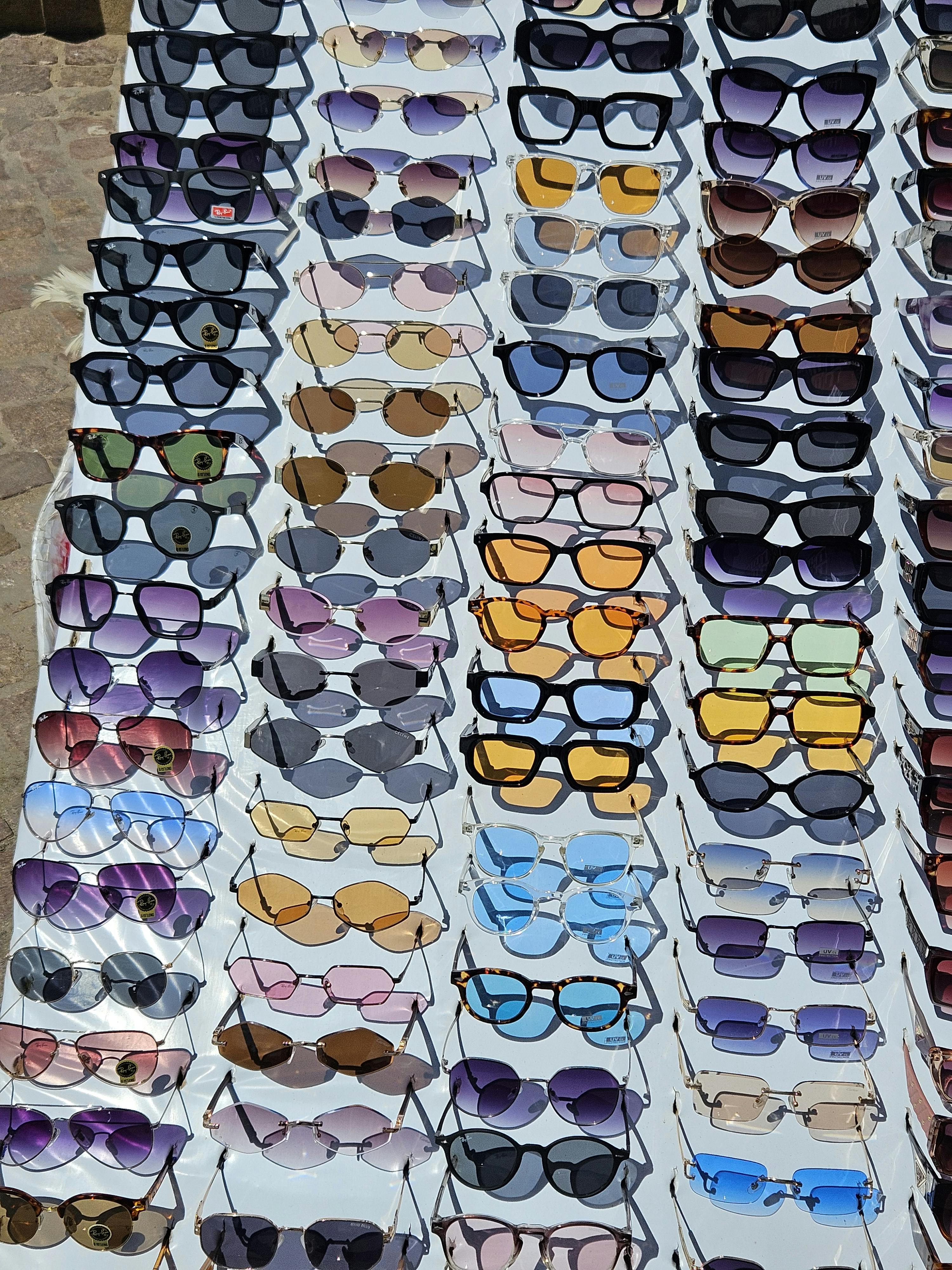
Lens tint is one of the most misunderstood aspects of sunglasses. Most people choose based on aesthetics — which makes sense, because the color of your lenses is visible and the optical properties are not. But tint does specific things to your vision, and knowing what those things are helps you choose a frame that actually works for how you use it.
This is a practical reference. Keep it short.
Gray
What it does: Reduces overall brightness without altering color perception. What you see through a gray lens looks like the world turned down in saturation, not shifted in hue.
Best for: Everyday use, driving, any situation where accurate color perception matters. Gray is the most neutral tint available.
Avoid if: You are doing activities in variable or low light. Gray reduces brightness uniformly, which is not useful in flat-light conditions.
Brown / Amber
What it does: Enhances contrast by filtering blue light. Colors shift warmer and details appear slightly sharper.
Best for: Driving, golf, fishing, any activity where contrast and depth perception help. Also performs well in partly cloudy conditions because the contrast enhancement compensates for flat light.
Avoid if: You need accurate color rendering. Brown shifts your color perception toward the warm end of the spectrum.
Green
What it does: A middle ground between gray and brown. Reduces glare while maintaining reasonably accurate color perception and offering modest contrast enhancement.
Best for: General use, particularly in bright sun. A good all-rounder.
Avoid if: You need the specific contrast-boosting properties of amber or the pure color accuracy of gray.
Yellow / Orange
What it does: Maximizes contrast in low-light or overcast conditions. Filters blue light aggressively. Makes everything appear brighter.
Best for: Overcast days, indoor sports, shooting, skiing in flat light.
Avoid if: You are wearing them in full sun. Yellow lenses in bright conditions reduce overall visibility rather than improving it.
Blue / Purple / Mirrored
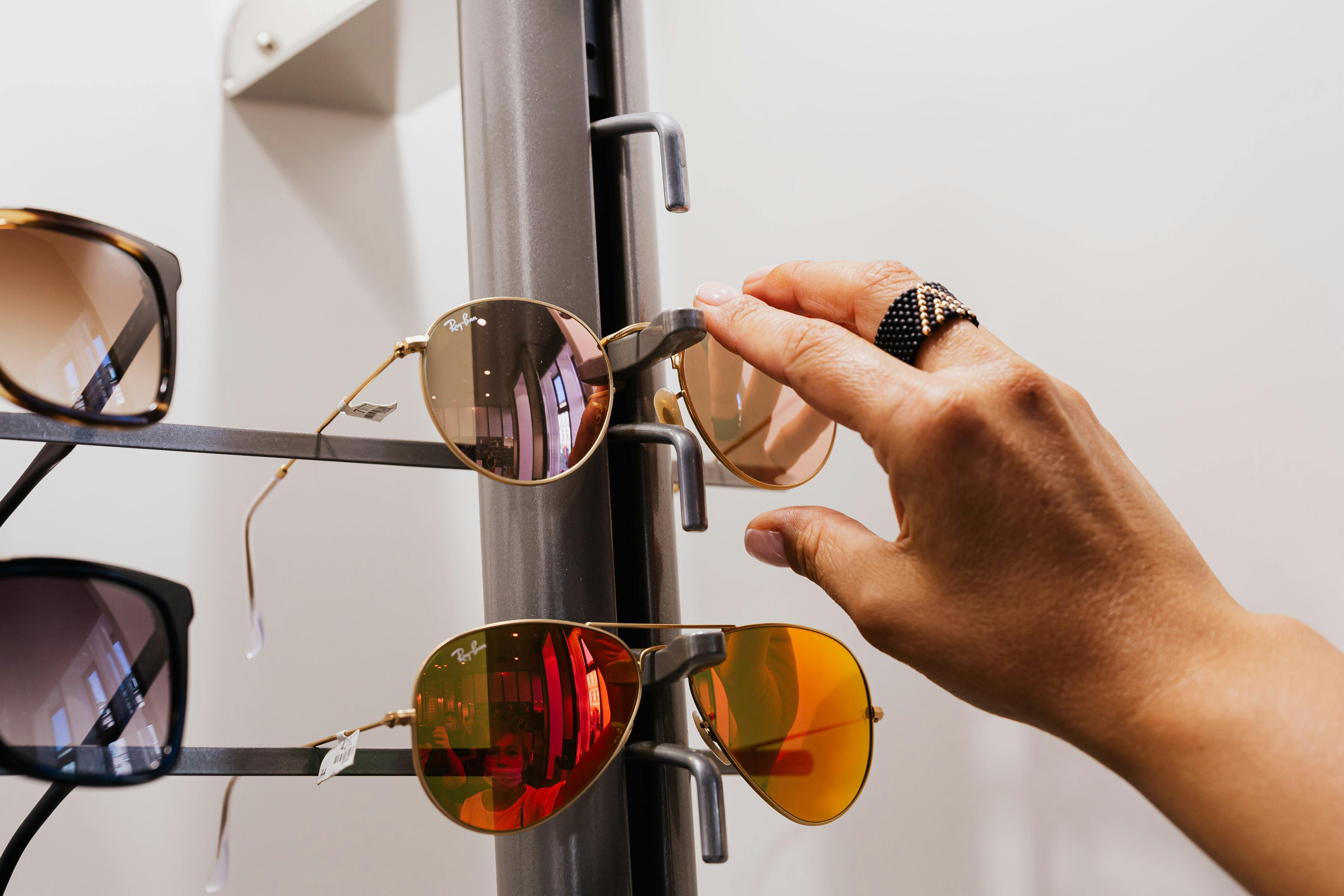
What it does: Primarily aesthetic. Mirrored coatings reduce glare from reflective surfaces, which has functional value. The underlying tint color in fashion-forward frames is usually gray or brown doing the optical work.
Best for: Style, beach environments where mirror coatings reduce water glare.
Avoid if: You are selecting based purely on optical performance. The exotic tint colors are largely decorative.
Rose / Red
What it does: Enhances depth perception and contrast in moderate light. Easier on the eyes during extended wear than amber.
Best for: Computer use (rose-tinted blue-light glasses use this principle), low-to-medium light activities, driving at dawn or dusk.
Avoid if: Bright midday sun. Rose tints do not reduce brightness adequately in intense light.
The polarization note
Tint color and polarization are separate features. A polarized lens has a filter that blocks horizontally reflected light — the glare that bounces off water, roads, and other flat surfaces. Polarization is available in any tint color. If you spend time near water or drive frequently, polarized lenses are worth the upcharge regardless of tint choice.
Quick reference
| Tint | Best use | Avoid |
|---|---|---|
| Gray | Everyday, driving | Low light |
| Brown/Amber | Contrast activities, partly cloudy | Color-critical work |
| Green | General all-rounder | Specialized needs |
| Yellow/Orange | Overcast, low light | Bright sun |
| Blue/Mirrored | Style, beach | Optical performance priority |
| Rose/Red | Dawn/dusk, extended wear | Intense sun |
Choose the tint that matches your primary use case. Then find the frame shape you like. In that order.